

Hybrid Ad Monetization for Apps
As mobile app publishers, we’re constantly balancing user experience with revenue goals. Ad monetization is one of the most powerful tools at our disposal, but how we set it up can be the difference between success and a huge amount of hours banging your head in the wall. A common mistake I see is relying exclusively on a single ad source, like Admob, without taking advantage of more flexible, higher-CPM opportunities through direct sales. In this post, I’ll explain why a hybrid approach using both AdMob and Google Ad Manager (GAM) is often the smartest route, and how to implement it effectively.
Just bear in mind that this approach comes with an extra effort of procuring Media Buying Companies, or even brands looking for ad space. Normally, if the apps are well known and well ranked, media buyers will reach out organically.
The Problem with AdMob-Only Setups
AdMob is a fantastic tool. It’s easy to integrate, provides access to Google demand, and works well out of the box. But it has its limits:
You’re at the mercy of network CPMs.
Limited control over prioritizing or pacing high-value campaigns.
Difficult to integrate direct deals or special campaigns without hacks.
This creates a “black box” scenario where optimization is limited and revenue potential might not be fully realized.
Why Add Google Ad Manager to the Mix?
Google Ad Manager (GAM) is often seen as a solution for large publishers or web properties, but that’s a misconception. Every app publisher can (and should) use it to:
-
Run direct deals or sponsorships with advertisers and / or brands.
-
Set up preferred deals or private auctions for better CPMs.
-
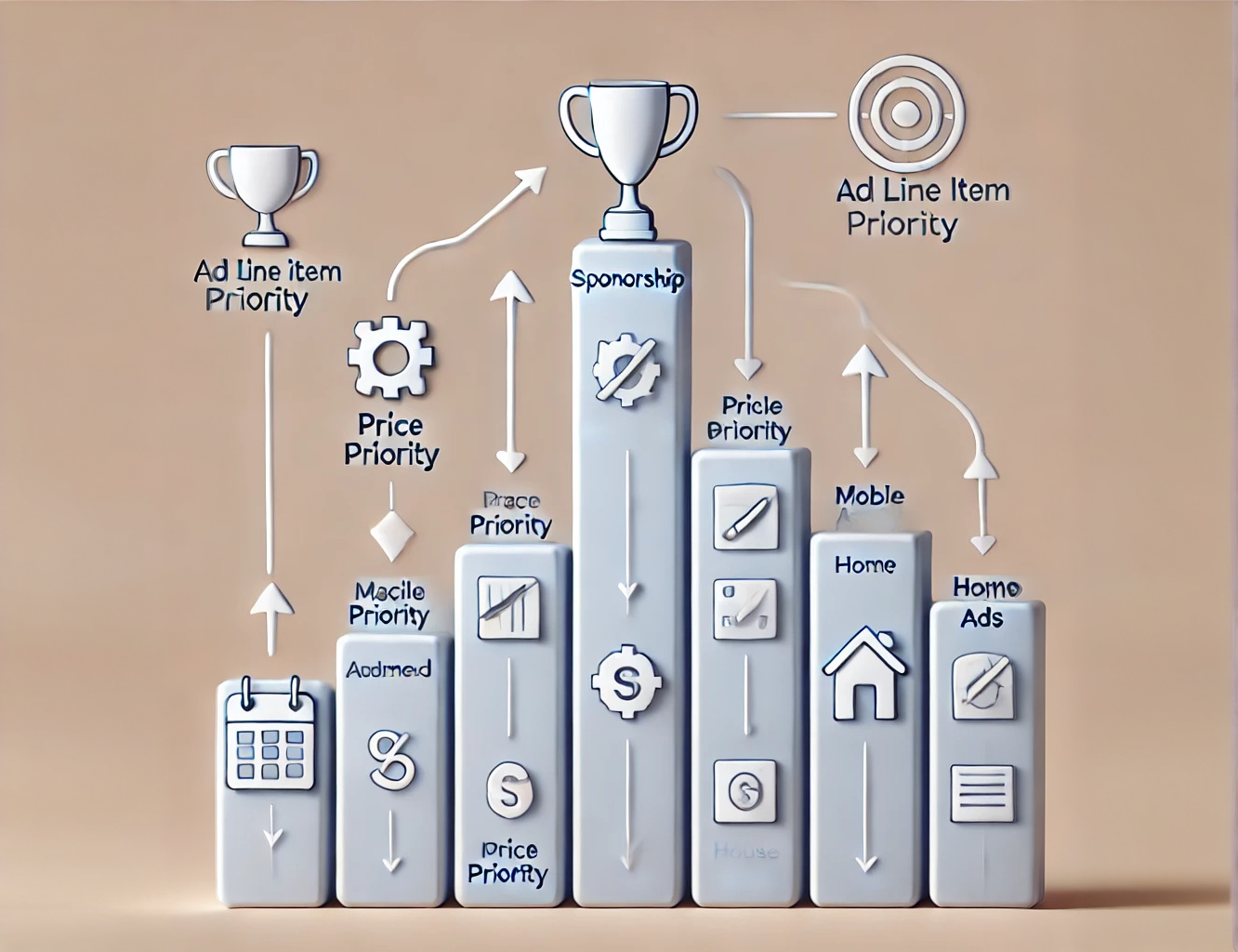
Control ad delivery priority using line item types (e.g., sponsorship, guaranteed, price priority).
-
Use yield management tools like price floors and dynamic allocation.
Essentially, GAM gives you control—and when paired with AdMob’s demand, it becomes a powerful combination. Also, you can target both Admob and GAM integration with one SDK: Google Mobile Ads.
The Ideal Setup: Mixing AdMob with Direct Sales via GAM
Here’s what a solid hybrid setup might look like:
-
Use AdMob as the primary demand source.
-
Sell directly to advertisers
Think niche partners, local businesses, or brand collaborations.
-
Set these up in GAM as sponsorship or guaranteed line items with higher priority.
-
You can even set frequency caps or geo-targeting rules.
-
Dynamically manage impressions in Firebase
-
Create remote config parameters with a json file that reflects each ad placement within your app.
-
Fill the remote config file with the ad units from Admob and Ad Manager in each ad placement.
Instruct your dev team to replace the hardcoded ad unit ID’s with the key name used in the remote config file, for each placement.
-
This way, you can dynamically choose what to display on your app, creating a manual impression priority, without the need for an app update.
Final Thoughts
If you are feeling that Admob is limiting your revenue strategy, this may be a good strategy. It may not be the ad monetization Holy Grail, but at least it will open an alternative door that will somehow surpass Admob limitations.
Look for media buyers and agencies locally. There’s a good chance that they are looking out for advertising real estate to promote a brand.
Ad monetization doesn’t have to be a one-size-fits-all approach. By combining AdMob’s ease of use and reach with Google Ad Manager’s control and flexibility, you create a resilient and revenue-optimized ad stack.
If you’re serious about growing your app business and monetizing smartly, this hybrid setup is the way forward.
Thanks
LS